

Oregonia
More Gingers from the Pacific Northwest

Last week, I shared a first selection of portraits from the Pacific Northwest, and since there are so many I love, I am sharing some more with you.
My Gingers of America portrait series began in January 2024. I wanted to use the rare and visible trait of ginger hair to reveal connections between people across the United States. The “ginger gene” is not only a Scottish phenotype, as you will see in the people below.
If you wish to support the project, please follow along, share the post, pledge funding or subscribe. This weekly email aims to bring light to your inbox with new and archival images from my photographic life.

Andrew Cardreva, CA
I have roots mostly from Italy, Germany and Ireland. The Irish is on both sides. Italian is mostly on my dad’s side, while the German is mostly my mom’s side. My last name is originally Albanian, and then it became Italian. One of my great uncles did a lot of research into the family history on that side. My ancestors originally came from a mountain in Albania called Këndrëvice. Four hundred or so years ago, when they were driven out by the Ottomans, they sailed across the sea to Italy, and changed their name to Cardreva.
My mom’s side of the family probably emigrated to the US in the 1800s. They had to eventually travel all the way west to California, and they’ve been around here for generations. My mom has ginger hair, and so does my older brother, but my dad looks very Italian, with dark curly hair and olive skin. And my little brother was actually adopted from Romania. So he, funnily enough, looks more like my dad than we biological kids do.
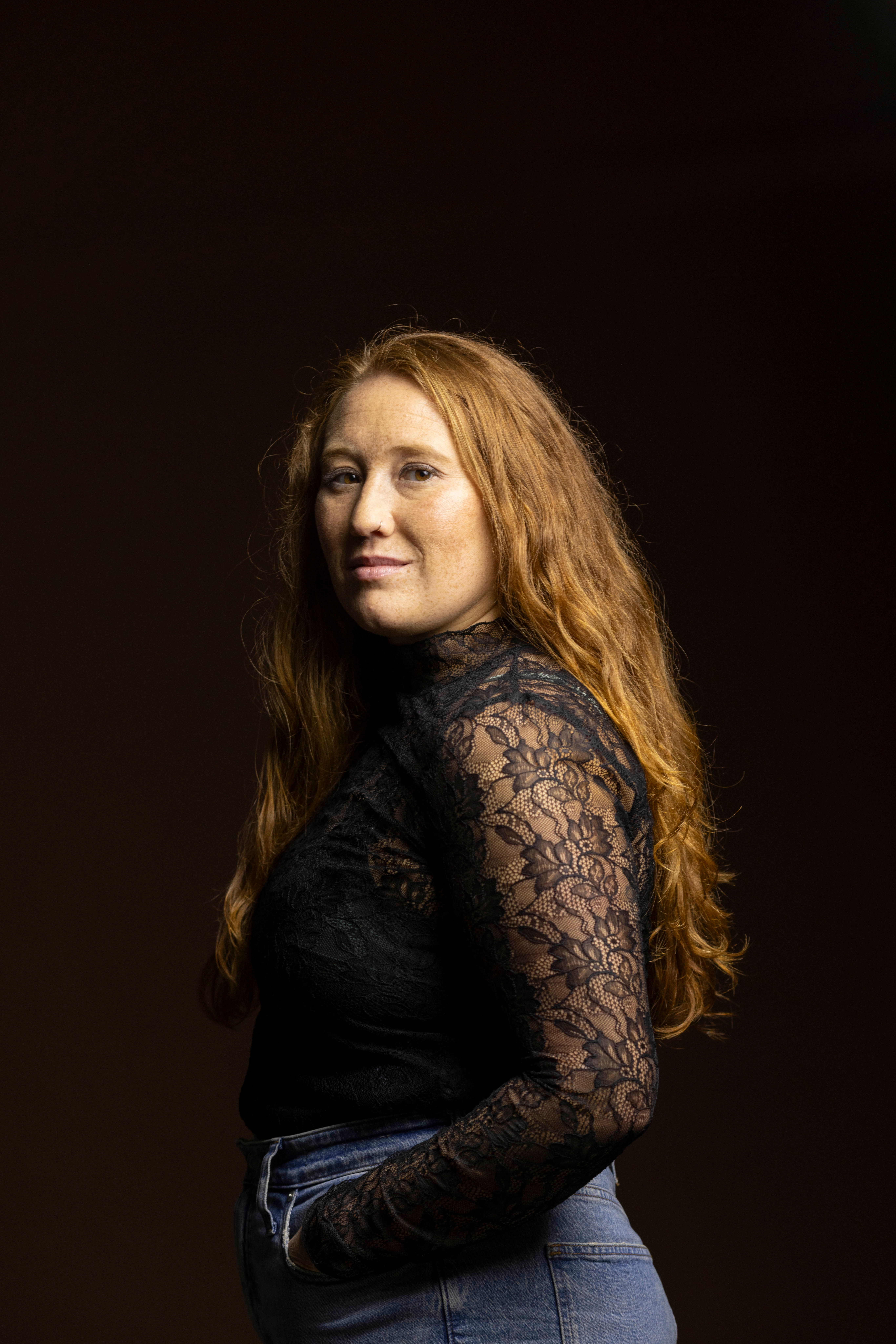
Keisha Engley, OR
My grandparents were farmers in Washington, and they gave all of their kids property. My grandpa’s side of the family lived in Washington for a long time, and he got his land for like nothing. And then he was drafted during the Vietnam War and met my grandma while he was in Vietnam.
Eventually she came to the US and brought all of her family to live on the farm. That was kind of a special thing for them. It was amazing. I grew up with all of my aunts and uncles living right next to each other in the middle of an apple orchard. And then at some point in my childhood, my grandpa planted other fruit, like peaches and nectarines and some plums and apricots. Wenatchee used to be the apple capital of the world. They were very proud. There are signs all over town, though there really aren’t that many apples there anymore.
I have a very blended family, and it’s funny to see all the redheads that pop up.
In more central Washington, you get a lot of migrant populations because of agriculture. That does create some diversity. When my grandma came to the United States, that’s the work she ended up doing: in the orchards and then working in warehouses and fruit-sorting.

Silas Voon, OR
Silas’s dad: We can’t go anywhere without people asking, “Do you dye his hair? Because it is outrageous. That’s not natural.” But it grew this way.
His name is Silas Patrick Tien Shui. Patrick is my middle name, and Silas is my dad’s name. Tien Shui is Chinese. It means “heavenly water”. My parents added the Tien – we kind of repurposed the name to make it more celestial. My dad’s Chinese, from Malaysia. My mom has Irish/ Scottish heritage. They met at college down in Fresno, California.
Silas’s mom: Her four kids all have dark hair and dark features, so when we finally had Silas – he’s the first grandkid – she was like, “Oh my gosh, finally somebody looks like me!”
My family is mostly Italian. We do have some Irish and Scottish blood, but not a lot. Nobody we can think of in my immediate family. Silas is just really special with blue eyes. We also think he’s left-handed. He’s got all those recessive genes. We always joke. We’re like, where’d this kid come from? Yeah, heaven. I know. He’s a heavenly child, isn't he?
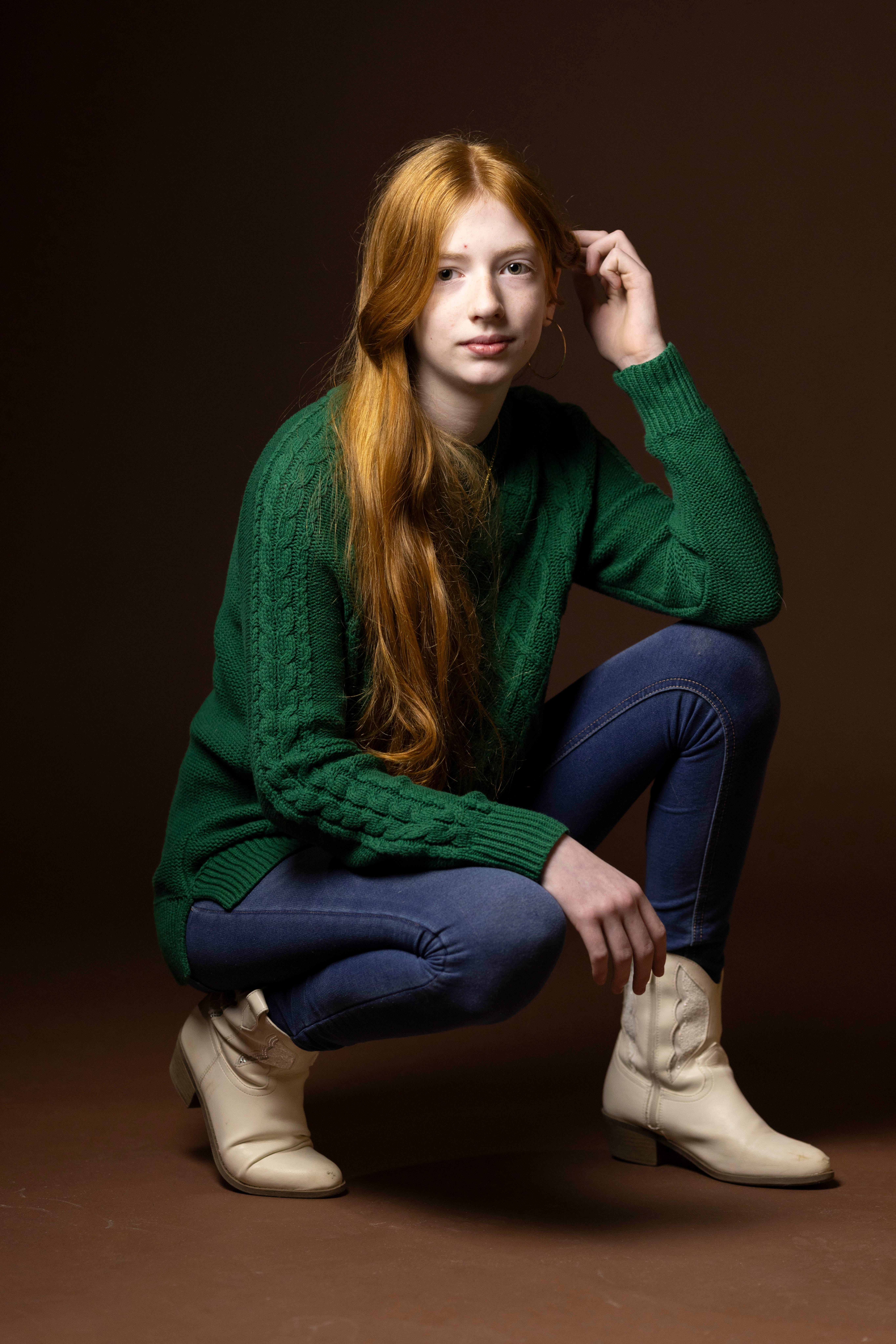
Ava Roell, OR
Ava: I would call my hair red or ginger. My sister calls me carrot-top. I never get compliments in school; they are always from adults. I’ve always been the only ginger in class. I went to a public school and had all the nicknames. There’s a bit of a different feeling in private school. The students are not quite as free to do everything. It’s a private Christian school, so everybody’s pretty much respectful.
Dad: My wife found out that we have some Irish royalty in our family history. There was an Irish princess.
Ava: I would tell my friends at school, and then whenever the teacher would leave, they would say, Ava’s in charge because she’s a princess.

Stuart Johnson, WA
I’m from Washington, about an hour north of Seattle and just over an hour south of the Canadian border. It’s the most – well, I’m a little biased – the most beautiful area of the country. Don’t tell people that because they’ll all move there.
It’s skipped two generations. When I was born, everybody was shocked. Nobody living in my family had red hair. The last person in my bloodline was my great-great-grandpa.
My mom’s side, the European side of her family, I don’t know as well. But she’s got some Native American in her. I think she’s an eighth Haida, a tribe from Vancouver Island, but she grew up in Washington.
But my dad’s side of the family is extremely Scandinavian. And I know that there is some Scottish heritage. I’ve got some Viking in me somewhere, which is not particularly surprising given my build.
Individualism is something that has really developed in the West as a whole, but specifically in America. Everything is for the self. There’s a lot of beauty to be found in how you interact with the world and establish your identity and confidence in faith or in secularism. But to other cultures, this individualism can seem self-absorbed.
I think for the most part, though, as an American, I’m proud of the fact that we are able to be somebody, no matter how odd and out-there it is, and people can find confidence in that.
But at the same time, as a Christian I find that individualism can lead to a lot of very sad realities and hard challenges. Identity is a difficult thing. And when we find it only in ourselves, we will inevitably disappoint ourselves.

Jonathan Haynie, OR
I spent a lot of time up in Alaska. I was a wilderness guide up there, and funnily enough, my nickname was Firebeard. So that’s my nickname with a lot of my friends now. I started growing my beard before I went to Alaska. And then when I got to Alaska and got my Firebeard nickname, I was like, alright, well, it’s part of me. Even my wife hadn’t seen me without a beard. If I shaved it off, I’d be like, should I get the hell out of here?
I grew up in Virginia. I went to college in Northern Virginia, near Washington, D.C., and then moved to Alaska and did three summers up there, and then I would be back in Virginia for the winters, and then in 2017 my wife and I moved out here because she got a job. I’m a carpenter. The company I work for now does a lot of historical renovations on super old houses in town, which is cool, fun stuff. We use Douglas fir, and obviously there is a lot of cedar and timber out here that’s used for different applications.
From Portland you can easily get to the coast, which in Oregon is spectacular and dramatic. You go an hour that way and you get up to Mount Hood, where you can go skiing and hiking and there are waterfalls. You go two hours that way and you’re in a high desert and then even further away in the corners of the state there are all sorts of other different places to see. Lots of remoteness out here, which is what we like about it.
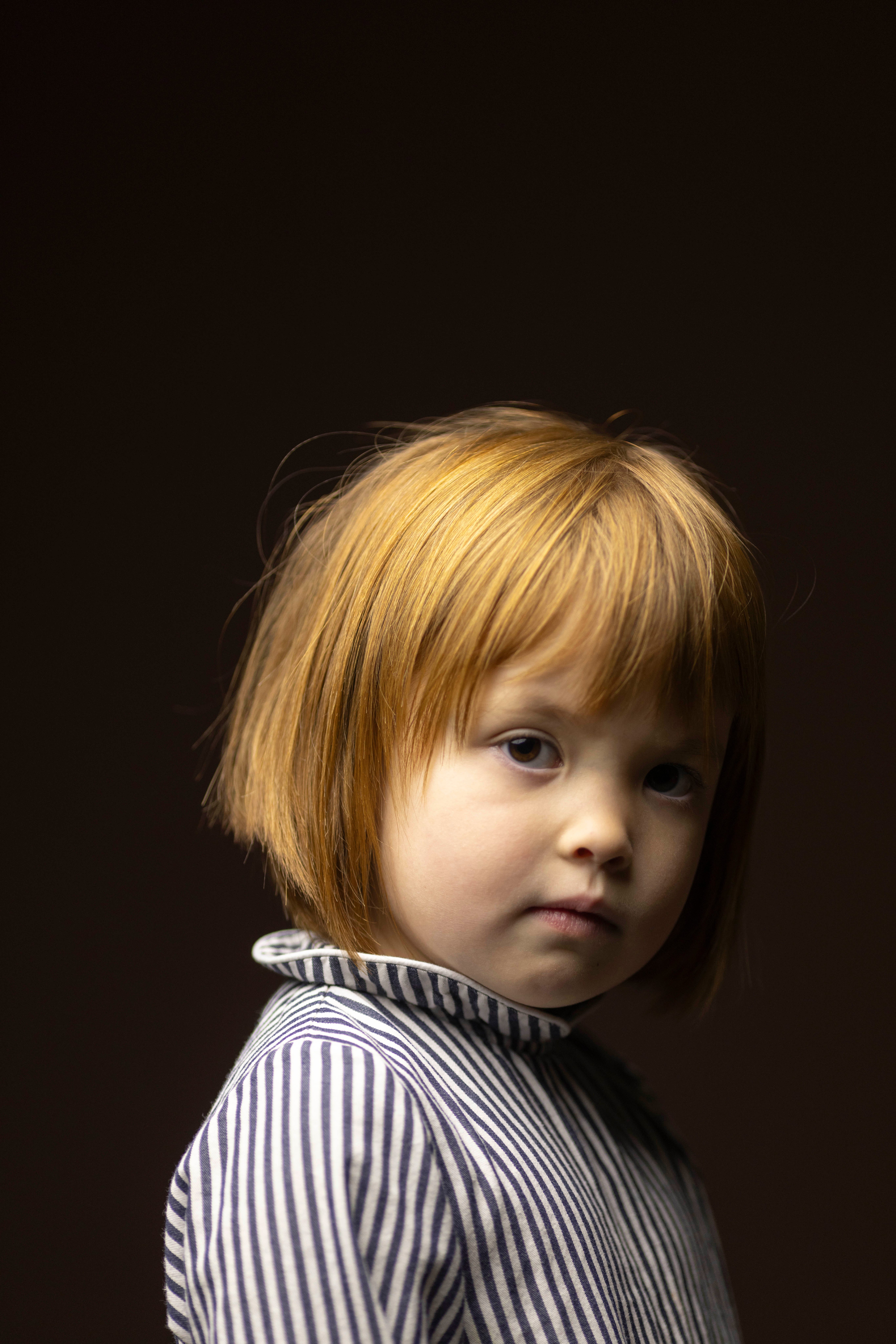
Randa Henry-Smoke, OR
Randa’s mom: Randa is five years old. She is named after my mom. It means honourable. A very honourable person.
My grandmother was red-headed, and that’s all I know on that. Randa’s biological father is a donor, native Alaskan. He’s a friend, so I do know a little bit about it. He has black hair. The Koyukon Athabaskan people are very far north in Alaska, like Fairbanks. You drive the extent of the Alaskan Highway and then get in a plane or on a snowmobile.
I was actually very surprised when she was born because I thought she would probably have dark hair. I have red highlights as my dad has Danish ancestry and my mom’s was Scandinavian. Her biological father has two other children who also have red hair: all three half-siblings have it. That’s a very strong recessive gene!
Randa knows everybody on her street. In Portland, people say hello. People very much believe in community and show up and participate so it’s quite a diverse state. Unfortunately, I would say that we’re losing [middle ground] a bit, but I think community is where you get it back. You talk to your neighbors and are friends with them despite what their political group may be. I think we do good work when we show up for our neighbors and listen to people and get involved and know people as people rather than as ideas.
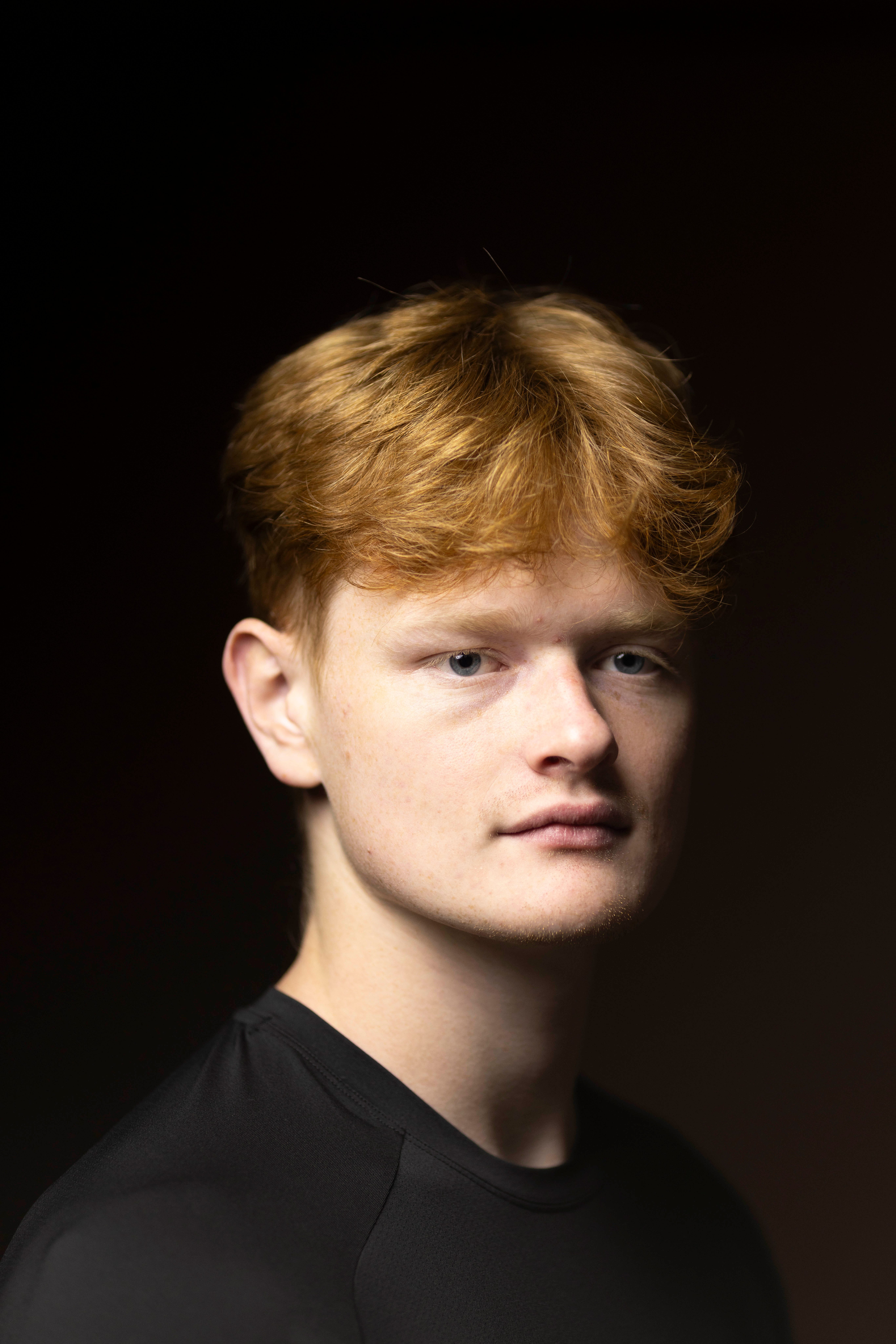
Keyan Parker, WA
I've been to over forty states but Washington and Oregon are my two favorites just because the nature is incredible.
Half of my family, my dad, my older sister, and my grandparents on my mom’s side are in Washington. My mom and two of my other sisters are in Florida. I’ve got family in Alaska, Arizona, and Virginia.
Red hair is primarily on my mom’s side. My half-sister’s dad was Black, so she’s not ginger, but it skipped her and went to her daughter, which is really interesting – tight ginger curls. It’s been kind of loosening a little bit, but she’s more red-haired than I am! When I was born, I was blonde and it switched.
The red hair always stuck out, especially in Florida. I lived in this place called Doral, which is just outside of Miami. It was 95% Cuban at the school I went to. My sister and I were the only white people there, and we happened to be tall gingers. So it was a really interesting experience. They call me Big Red now, which is a little better than the nickname I had in middle school.
I love these photos and interviews. Both are so revealing, and each person has so much beauty and character.