


There is a 1,000-year empire missing from most school history lessons, a memory hole from the consecration of Constantinople in 330 to the fall of this New Rome in 1453. Byzantium, the city that became Constantinople and then – only in the 20th century – Istanbul, was named after the Emperor Constantine and was the centre of the world for a Mediterranean millennia. Yet what do most people know about the Byzantine, or Eastern Roman, Empire? Creaky administration, perhaps. Crusades, maybe, or it’s enduring beauty in wonders like the Hagia Sophia.
When I first read Judith Herrin’s book Byzantium, I felt a longing, a kind of homesickness for a place I had not been. What Germans would call Sehnsucht. Then, standing with Judith in churches in Ravenna, Italy, I experienced the Byzantine Empire for the first time.
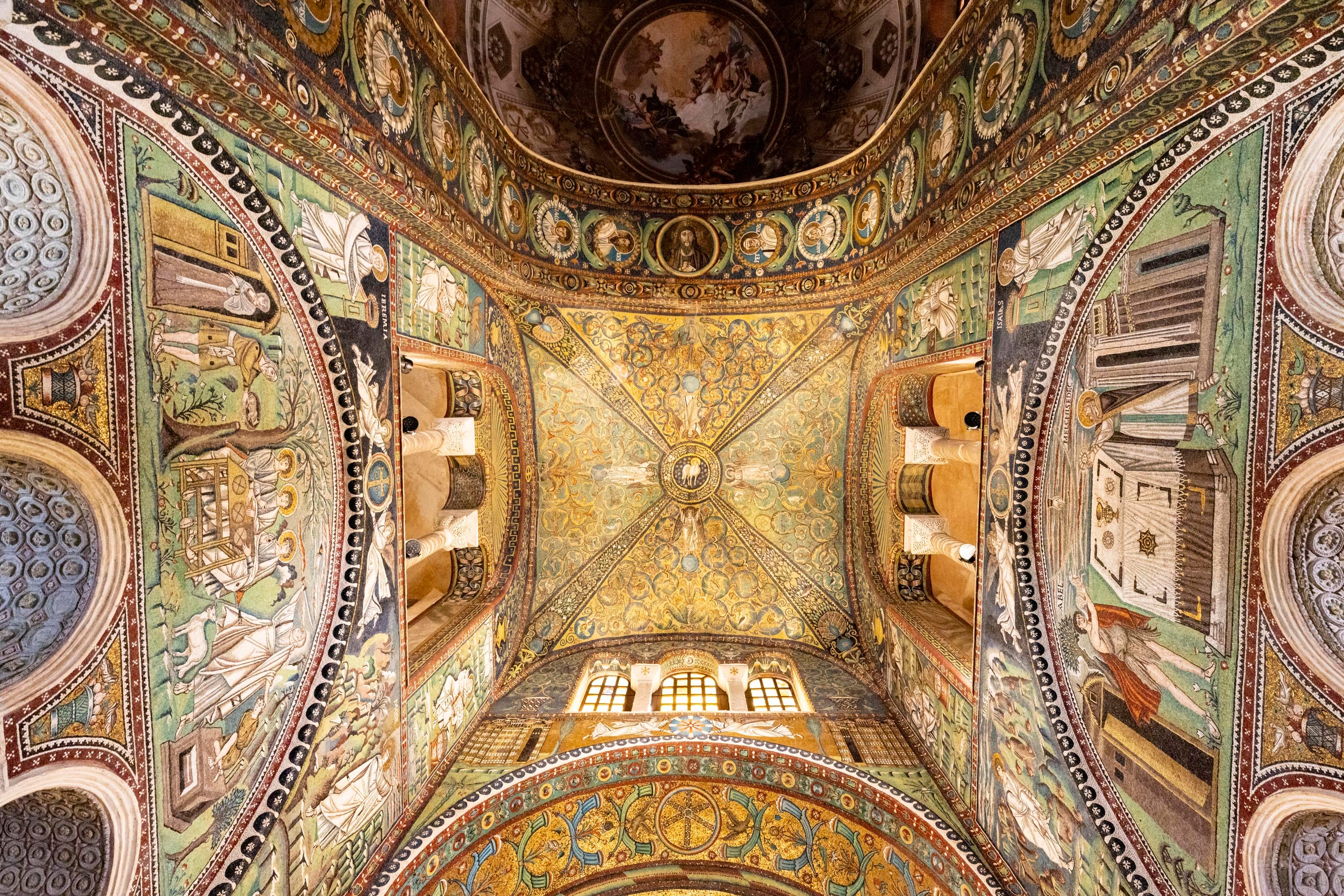
Ravenna was once the seat of the Byzantine government in what is now Italy (the Western Roman Empire), and in the sixth century its bishops began building churches. Some of these incredible buildings, including the Basilica of San Vitale (above) and the Basilica of Sant’Apollinare in Classe, remain, and offer a direct experience of the glorious architecture and decorative arts of the empire. Go to Ravenna before you die, I beg you.
This week, I once again experienced profound beauty in a 21st-century portal to Byzantium found in an unexpected place – Southern California.
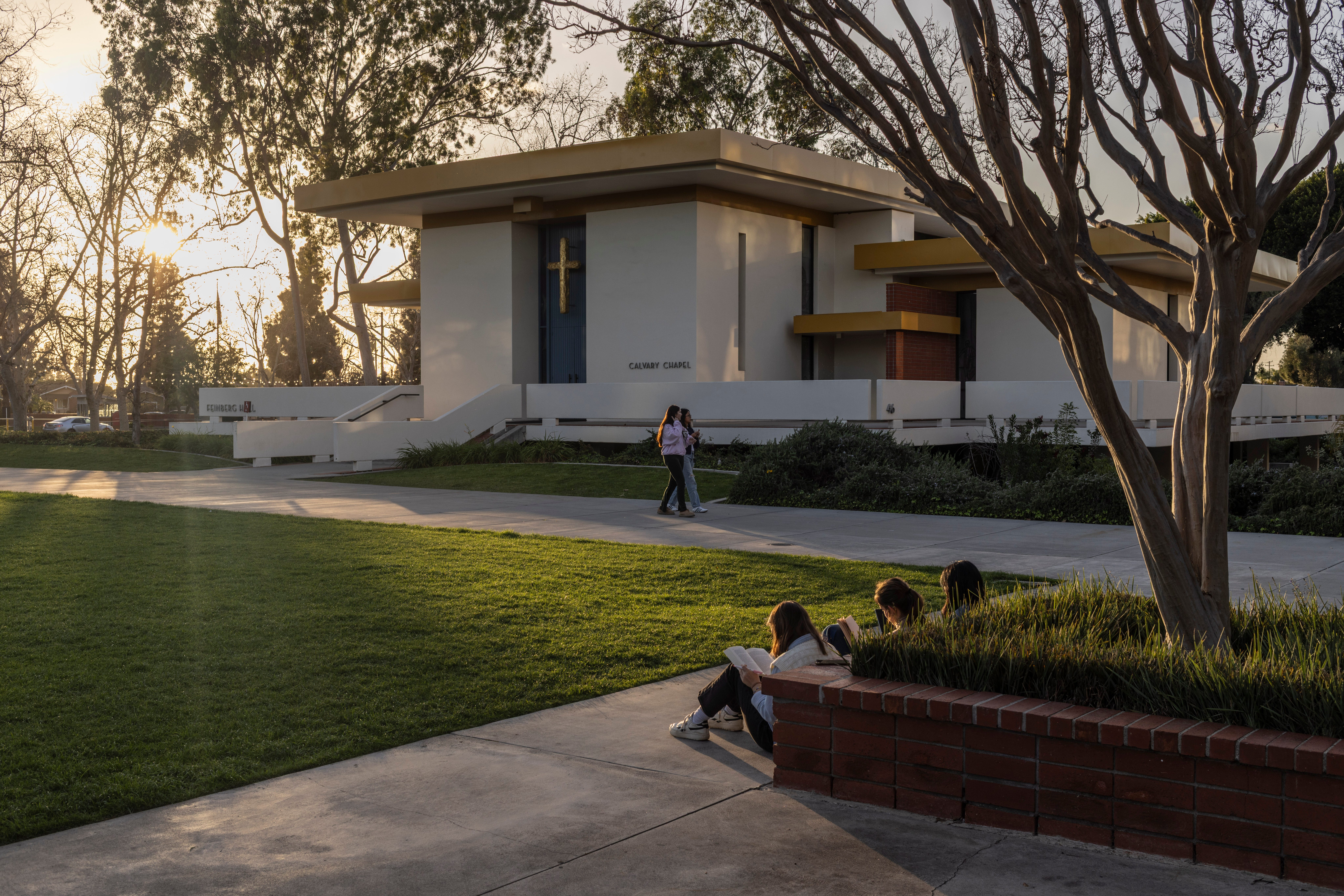
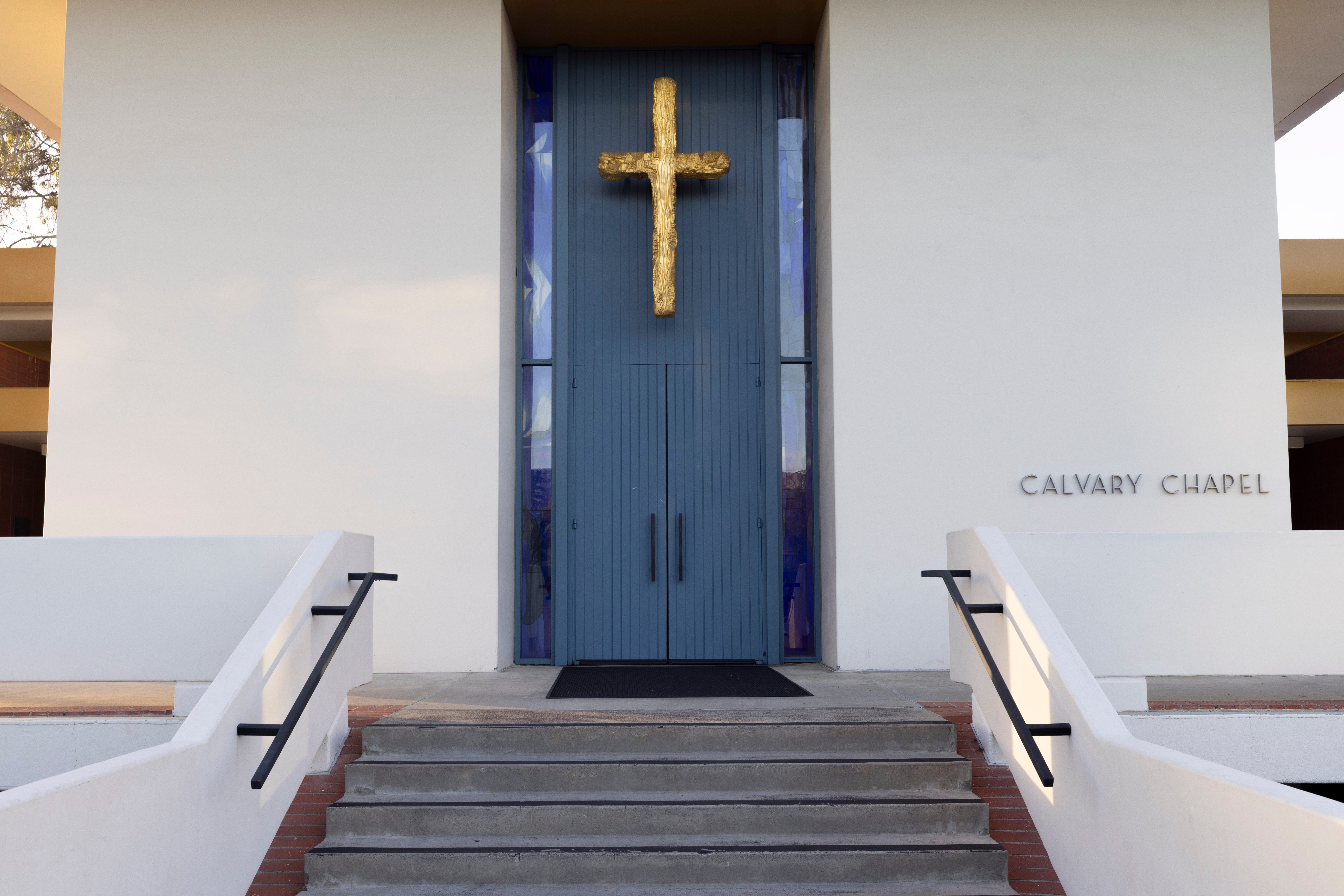
Cavalry Chapel is on the campus of a modern evangelical university, Biola, and was transformed in 2018 by two of Denmark’s greatest artists, Maja Lisa Englehardt and the late Peter Brandes. Inside is Englehardt’s incredible relief wall of the Resurrection, a golden grid made by hand-carving five tons of clay, casting them in plaster and overlaying the plaster with gold.
So great is this wall of gold that the late Byzantine scholar Alexei Lidov, I am reliably informed, sat quietly in front of it for an hour, before announcing- Byzantium had come to the 21st century!
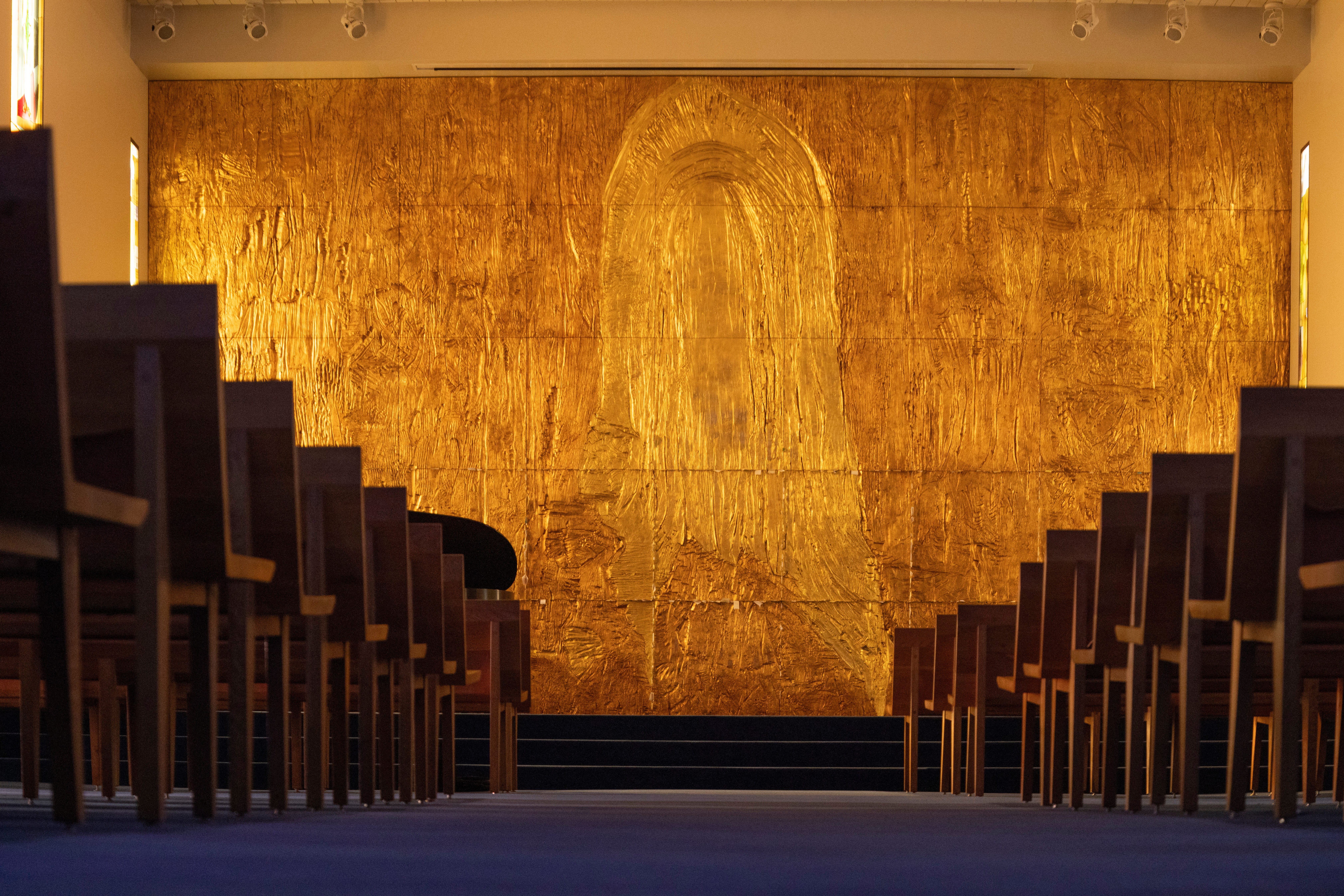
Inserted into the thin gaps between sections are prayers from students, a spontaneous gesture, the impact of which grows each semester.
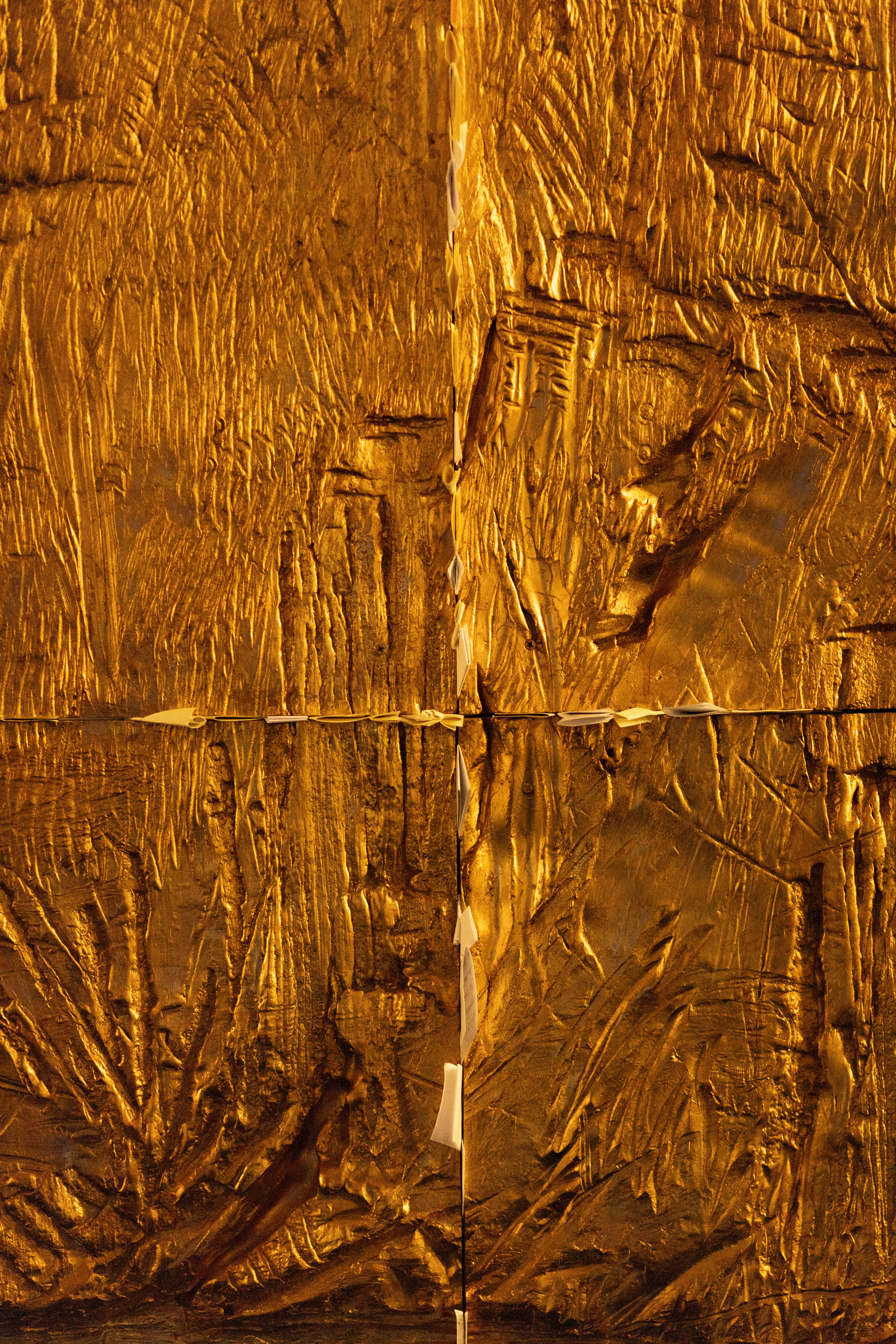
I knelt before the wall: I am a photographer, and we contort ourselves for the best pictures. To photograph such beauty is both simple and difficult. Simple in that the main subject is obvious. The difficulty comes in trying to capture the experience of how the photographer feels experiencing it.
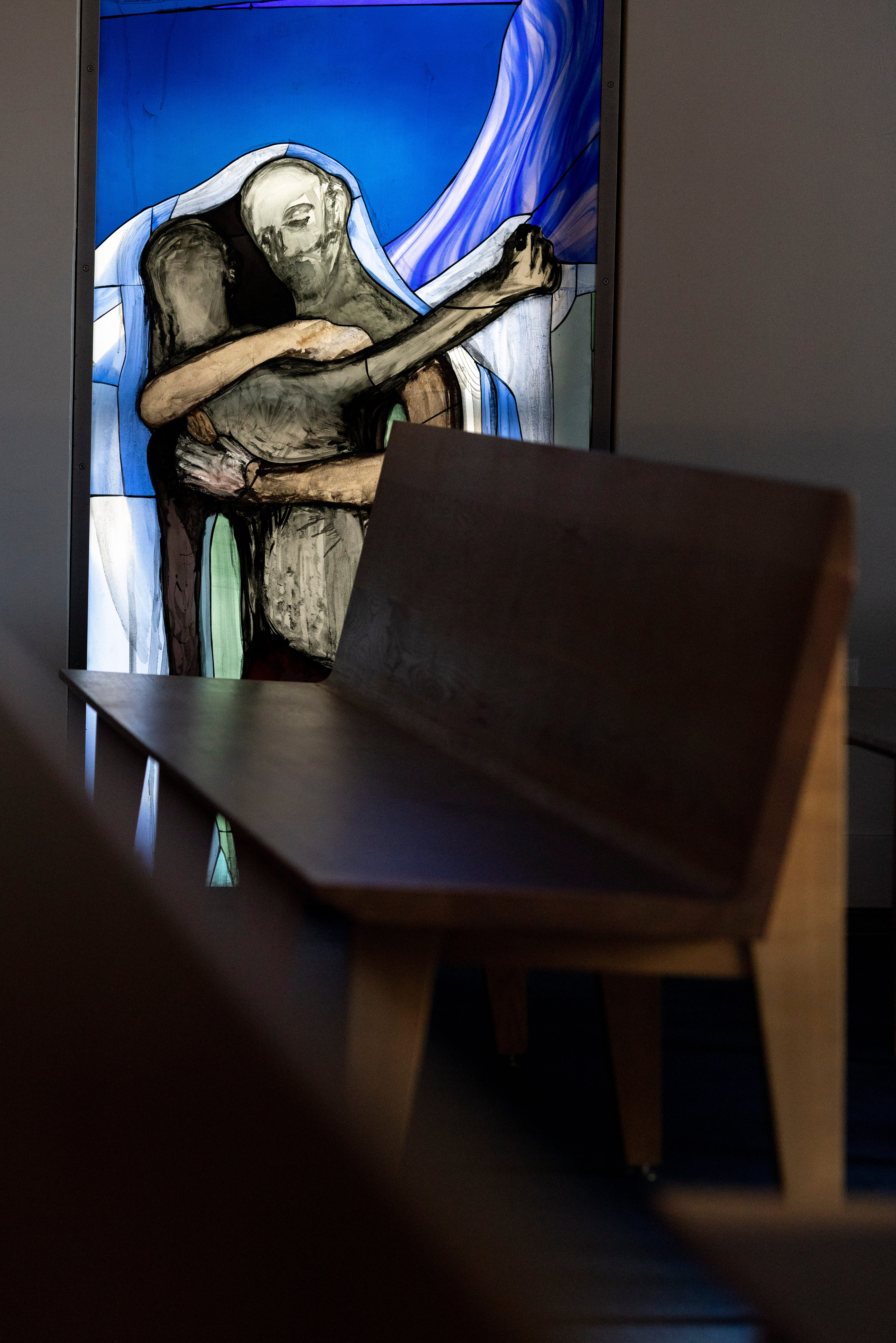
The turning point was the moment I switched off the lights and let the slotted side windows (covered in Brandes’s stunning stained glass) cast Californian sunset light across its surface. I was no longer in La Mirada but transported to Ravenna, where I had spent sunrise and sunset in churches, waiting for the mosaics to come alive.
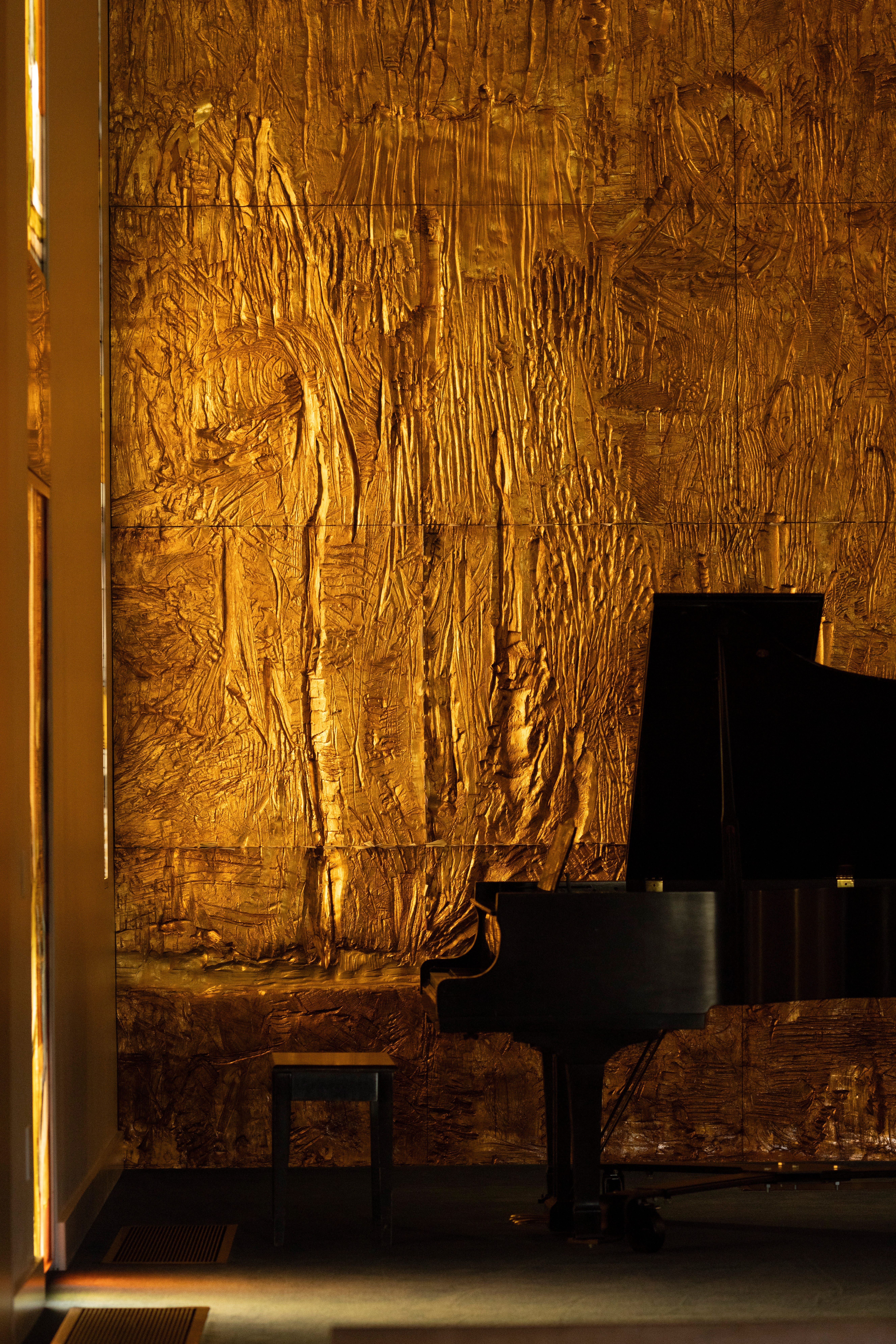
Photographers salivate over the golden hour, the two hours after sunrise and before sunset when light and life feels more present. I call it eternal light. Something special happens in that light that transcends time and space. Yet I remain there: it’s as if I am more there, in fact. Awakened into that moment.
I do not believe any space on earth is more sacred than other, but some places, like Ravenna, like the Cavalry Chapel, seem better than others at offering a portal to another dimension, one separate to space and time, and perhaps outside of everything entirely bathed in that light of all light.
That chapel.... it's so stunning. I've only ever been once and there's nothing like it. We did some Estuaries stuff there.